


Are Roof Leaks Covered by Insurance? What Homeowners Need to Know
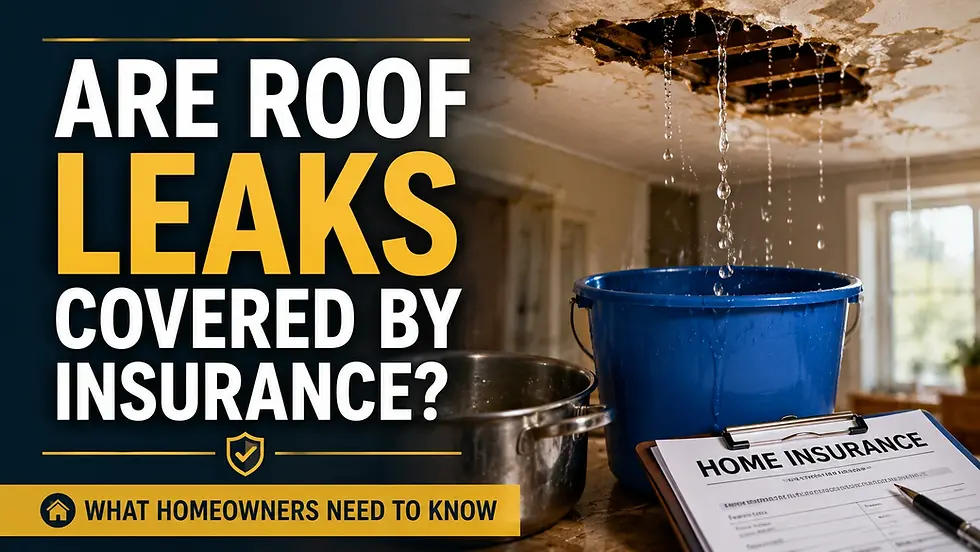
You notice a water stain on your ceiling after a heavy storm. Maybe it's a slow drip near a light fixture, or you spot damp patches in the attic. Your first thought? "Is this covered by my homeowner's insurance?"
It's a fair question, and the honest answer is: it depends. Whether roof leaks are covered by insurance is a yes-or-no question that comes down to why the leak happened in the first place. Insurance companies care a lot about the cause. Understanding that difference can save you thousands of dollars and a whole lot of frustration. Let's break it down clearly.
The Golden Rule: Cause Matters More Than the Leak Itself
Homeowner's insurance protects against damage that occurs suddenly and unintentionally, rather than damage that results from aging. Therefore, one of the critical questions your insurance company will have when you file a claim for a roof leak is whether it was caused by a sudden event or whether it came “gradually”.
That answer determines everything.
When Roof Leaks ARE Typically Covered
Most standard homeowner's insurance policies (HO-3 policies) will cover roof leaks if the damage was caused by a covered peril (that's insurance-speak for an event they agreed to protect you against).
Here are the most common situations where you're likely covered:
Hailstorms: Hail can crack, dent, or knock shingles loose, creating entry points for water.
High winds: Wind can lift or strip shingles, especially on older roofs.
Fallen trees or debris: If a tree branch crashes onto your roof during a storm, that's typically covered.
Fire damage: If a fire burns through part of your roof and rain gets in, insurance usually steps in.
Ice dams: In colder climates, ice buildup along roof edges can force water under shingles (coverage varies by policy, so check yours).
Vandalism: Intentional damage to your roof is generally covered.
The key pattern: these are all unexpected events outside your control.
When Roof Leaks Are NOT Covered
This is where many homeowners get blindsided. Insurance companies will often deny claims if the leak resulted from:
Situation | Why It's Denied |
General wear and tear | Normal aging isn't an "accident." |
Poor or deferred maintenance | Homeowners are expected to maintain their property |
Pre-existing damage | Known issues that were never repaired |
Improper installation | Faulty workmanship from the beginning |
Mould or rot from long-term moisture | Usually classified as a maintenance failure |
Flooding from ground-level water | Requires separate flood insurance |
If your roof is 20+ years old and hasn't been maintained, an insurer may argue that leaks were predictable, not sudden, and decline coverage.
The "Are Roof Leaks Covered by Insurance" Question Gets Complicated With Age
Here's something many homeowners don't realize: even if your roof leak is caused by a covered event, the age and condition of your roof can affect your payout.
Some insurance companies use Actual Cash Value (ACV) instead of Replacement Cost Value (RCV):
Replacement Cost Value (RCV): Pays you what it costs to replace the roof today.
Actual Cash Value (ACV): Pays you the depreciated value. A 15-year-old roof with a 20-year lifespan might only get you 25% of the replacement cost.
Always check your policy to understand which method your insurer uses. This single detail can mean the difference between a $12,000 payout and a $3,000 one.
What to Do Immediately After Noticing a Roof Leak
Acting quickly matters, both for protecting your home and for protecting your insurance claim.
Document everything: Take photos and videos right away, before any cleanup.
Make temporary repairs: Cover the area with a tarp or seal it temporarily. This prevents further damage and shows the insurer you acted responsibly.
Don't make permanent repairs yet: Wait until an adjuster has seen the damage, if possible.
Call your insurance company: Report the damage as soon as possible. Most policies have time limits on filing claims.
Keep all receipts: For any emergency repairs, materials, or professional services.
Why a Professional Roof Inspection Matters for Your Claim
When you file a claim, the insurance company will send its own adjuster. That adjuster works for them, not for you. Their job is to assess the damage, but also to determine if the damage falls within what's covered.
This is exactly why having an independent, professional roof inspection on record is so valuable. Here's what it does for you:
Provides a neutral, third-party assessment of your roof's condition before and after damage
Documents pre-existing conditions vs. new storm damage, a critical distinction for claims
Gives you leverage if the insurer's adjuster underestimates the damage
Helps you understand what truly needs repair vs. what's cosmetic
At Murray Inspection Services, our certified inspectors conduct thorough roof inspections that give you a clear, honest picture of what's going on, with no guesswork and no surprises. Whether you're buying a home, preparing for storm season, or in the middle of a claim dispute, having a documented inspection report in hand puts you in a much stronger position.
A Quick Look at What Your Insurer Looks For
When your insurance adjuster visits, here's what they'll typically evaluate:
Covered damage indicators:
Missing or cracked shingles from impact
Hail bruising on shingles
Damaged flashing around chimneys, vents, and skylights
Wind-lifted sections
Structural damage from fallen objects
Signs that may result in denial:
Granule loss from age (not impact)
Cracked caulking or sealant from UV exposure
Sagging or rotting decking from long-term moisture
Missing shingles with no corresponding storm event
Evidence that the roof was already deteriorating before the event
Separate Coverage You May Need
Standard homeowner's insurance doesn't cover everything. Depending on where you live, you might need:
Flood insurance: Required separately; covers damage from rising water, not just rain coming through the roof.
Earthquake insurance: Roof damage from earthquakes isn't typically covered under standard policies.
Windstorm riders: In high-risk coastal or tornado-prone areas, wind damage may require an add-on.
It's worth reviewing your policy once a year and asking your agent whether your coverage matches the actual risks in your area.
Are Roof Leaks Covered by Insurance If I Just Bought the Home?
If you recently purchased a home and discover a leak shortly after closing, coverage will still depend on the cause. However, this is a situation where a pre-purchase home inspection would have been incredibly valuable, and could have revealed roof issues before you were on the hook for them.
If a seller failed to disclose a known roof problem, you may have legal options beyond your insurance policy. This is yet another reason why a thorough inspection before buying isn't just a formality. It's financial protection.
Tips for Keeping Your Roof in Insurable Condition
Insurance companies expect you to maintain your home. Neglect can not only void a claim but also lead to the non-renewal of your policy. Here are some simple habits that keep your roof healthy and your coverage intact:
Inspect your roof at least twice a year, especially in spring and fall.
Clear gutters and downspouts: Clogged gutters cause water backup that can work under the roofline.
Trim overhanging branches: Reduces risk of falling limbs and ongoing abrasion.
Check flashing and seals around penetrations: These are common failure points.
Address small issues early: A $200 repair today can prevent a $10,000 claim dispute later.
Keep records: Document any repairs you make. This shows the insurer you've been proactive.
The Bottom Line on Roof Leaks and Insurance
So, are roof leaks covered by insurance? The short version: yes, if the leak was caused by a sudden, covered event. No, if it was the result of aging, neglect, or pre-existing damage.
The longer version is that most homeowners don't find out where they stand until they're already dealing with a leak and a claim. Getting ahead of it, with regular inspections, proper maintenance, and a clear understanding of your policy, is the smartest move you can make as a homeowner.
Don't Wait Until There's a Problem
At Murray Inspection Services, we serve Lincoln, Nebraska, and the surrounding communities with detailed, certified home and roof inspections. We're InterNACHI Certified Professional Inspectors, which means we're held to the highest national standards, and we give you a clear, easy-to-read report so you actually understand what's going on with your property.
Whether you need a roof inspection before a storm season, after a weather event, or before listing or buying a home, we're here to help you make informed decisions with confidence.
Call us at (402) 802-7021. Schedule your inspection online today
Don't leave your roof or your insurance claim to chance. A professional inspection gives you the documentation and peace of mind you need.



Comments