


How Green Roof Drainage Systems Protect Your Building
Green roofs are becoming more popular across commercial and residential properties, and for good reason. They help manage stormwater, improve energy efficiency, and add years of life to a roofing membrane. But here's something a lot of property owners don't think about until it's too late: none of that works without a properly functioning drainage system underneath.
If the drainage layer fails, water has nowhere to go. That means pooling, added structural weight, root infiltration into your membrane, and eventually, serious damage to the building below. Understanding how green roof drainage systems work and knowing the warning signs of failure can save you from a very expensive repair bill.
What Exactly Is a Green Roof Drainage System?
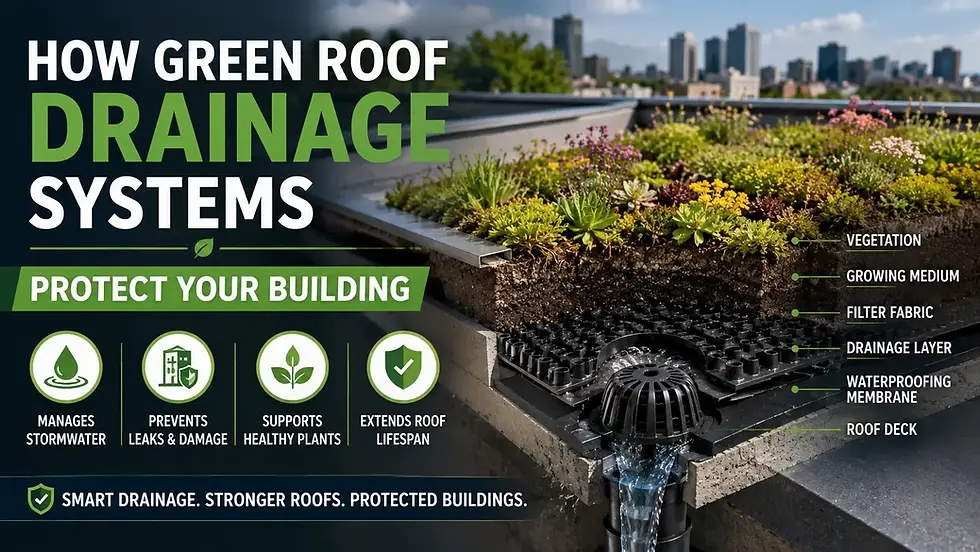
A green roof isn't just soil and plants sitting on top of a building. It's a carefully layered system, and drainage is one of its most critical components. Here's how a typical green roof is structured from the top down:
Layer | Purpose |
Vegetation / Plants | Absorbs rainfall, reduces runoff |
Growing Medium (Substrate) | Supports root growth, retains some moisture |
Filter Fabric | Prevents fine particles from clogging the drainage |
Drainage Layer | Moves excess water away from the root zone |
Waterproofing Membrane | Protects the building structure from water intrusion |
Roof Deck | The structural foundation of the whole system |
The drainage layer (typically made of plastic drainage mats, gravel, or specially designed retention/drainage boards) sits between the growing medium and the waterproofing membrane. Its job is to hold the right amount of moisture for plants while directing the surplus toward roof drains and outlets.
When this layer is undersized, blocked, or improperly installed, the entire system is compromised.
Why Drainage Is the Most Critical Part of a Green Roof
You can have the highest-quality waterproofing membrane and the most carefully chosen plant species, but if water cannot drain properly, problems will follow. Here's why drainage matters so much:
Excess weight on the structure. Water is heavy, roughly 8.3 pounds per gallon. A saturated growing medium holds far more water than a well-draining one. Over time, this excess load can stress roof joists, beams, and decking, especially on older buildings not originally designed for a green roof.
Root and membrane damage. When drainage is poor and water sits stagnant, plant roots begin searching for new pathways. That often means growing downward and eventually penetrating the waterproofing membrane, the very layer meant to keep water out of your building.
Mould, mildew, and interior leaks. Once water finds a way past the membrane, it doesn't stop. It travels into insulation, ceiling assemblies, and walls, and can cause widespread mould growth that's both costly to remediate and hazardous to occupants.
Drain outlet clogging. The filter fabric and drainage layer work together to keep fine particles from reaching your roof drains. If either is compromised, sediment builds up in drain outlets, which is one of the most common green roof maintenance issues.
Signs Your Green Roof Drainage May Be Failing
Most drainage problems develop slowly and aren't immediately obvious from the outside. That's why regular professional inspection is so important. Watch for these warning signs:
Ponding water visible on the surface of the green roof after rainfall, lasting more than 48 hours
Soggy or oversaturated substrate that never seems to dry out
Dying or wilting plants in patches, often a sign of anaerobic (oxygen-deprived) soil caused by waterlogging
Unexplained interior water stains on ceilings or upper walls
Slow or blocked roof drains that overflow during moderate rain
Visible root penetration into the drainage or membrane layers during inspection
Unusual structural deflection: sagging or unevenness in the roof deck
Any one of these signs warrants a closer look. A combination of several means you should schedule a professional inspection right away.
Common Causes of Green Roof Drainage Problems
Knowing what causes drainage failure helps you prevent it. Here are the most frequent culprits:
Poor original design. Not every roofing contractor is experienced with green roofs. An improperly sized drainage layer, or one with insufficient slope toward drains, will always lead to problems down the road.
Inadequate maintenance. Debris, sediment, and plant roots can all migrate into the drainage layer over time. Without periodic cleaning and inspection, blockages develop gradually until they cause visible damage.
Improper plant selection. Deep-rooted plants on an extensive green roof can punch through filter fabric and create direct pathways for fine soil particles to enter and clog the drainage layer.
Deteriorated filter fabric. Filter fabric doesn't last forever. UV exposure, physical damage during planting, and simple age can degrade it, allowing the growing substrate to migrate downward.
Undersized or poorly placed drain outlets. In heavy rainfall events, even a well-designed drainage layer can't compensate for drain outlets that are too few, too small, or positioned at high points rather than low points of the roof.
What a Professional Roof Inspection Looks For
When a certified inspector evaluates a green roof, they're not just looking at the plants. A thorough inspection examines the entire roofing assembly, including:
Drainage outlet condition: Are the drains free of debris and functioning properly?
Surface water retention patterns: any low spots where water consistently pools?
Membrane integrity at penetrations: drains, vents, and edges are common failure points
Substrate depth and consistency: Is the growing medium the right depth and evenly distributed?
Filter fabric condition: Is it intact and properly overlapped at seams?
Signs of root intrusion: any evidence of roots growing below the drainage layer?
Structural indicators: any deflection, cracking, or movement in the roof deck?
Interior evidence of leaks: water staining, mould, or damage in the space below the roof
Green roof drainage systems are complex enough that a standard visual inspection from the surface often isn't enough. An experienced inspector knows where problems hide and what subtle signs to look for before they turn into major issues.
How Often Should a Green Roof Be Inspected?
Most roofing professionals and green roof industry guidelines recommend:
Inspection Type | Frequency |
General visual check (owner) | Every 1–2 months |
Seasonal maintenance inspection | Twice per year (spring and fall) |
Certified professional inspection | Annually, or after major storm events |
Post-installation inspection | Within the first year after installation |
Annual professional inspections are particularly important for green roof drainage systems because problems in the drainage layer are often invisible from the surface. A trained inspector can probe the substrate, examine accessible drain areas, and review the interior of the building for any evidence of water intrusion.
Green Roof Drainage and Your Building's Long-Term Value
A well-maintained green roof with a properly functioning drainage system is a genuine asset. It extends the life of your waterproofing membrane by protecting it from UV exposure and temperature fluctuations. It reduces stormwater runoff. It improves insulation performance. And it adds to the visual and ecological value of the property.
But all of those benefits depend on one thing: the drainage layer doing its job.
Neglecting drainage maintenance is one of the most common ways property owners lose those benefits and end up spending far more on repairs than they ever would have on preventive inspections.
Protect Your Investment with a Professional Inspection
Whether you're managing a commercial property with an established green roof, considering adding one, or buying a building that already has one, a professional inspection is the smartest step you can take.
At Murray Inspection Services, we provide thorough, certified inspections of residential and commercial properties in Lincoln, Nebraska and the surrounding area. As an InterNACHI Certified Professional Inspector, we know how to evaluate roofing systems, including the drainage layers, membrane integrity, and structural components that determine whether your roof is protecting your building or quietly letting water in.
Don't wait for a leak to tell you something is wrong.
Schedule Your Inspection Today or call us at (402) 802-7021. We'll give you a clear, honest picture of your property's condition, so you can make informed decisions with confidence.



Comments